Phone: +91-9310885321
 Email: support@learnhub4u.com

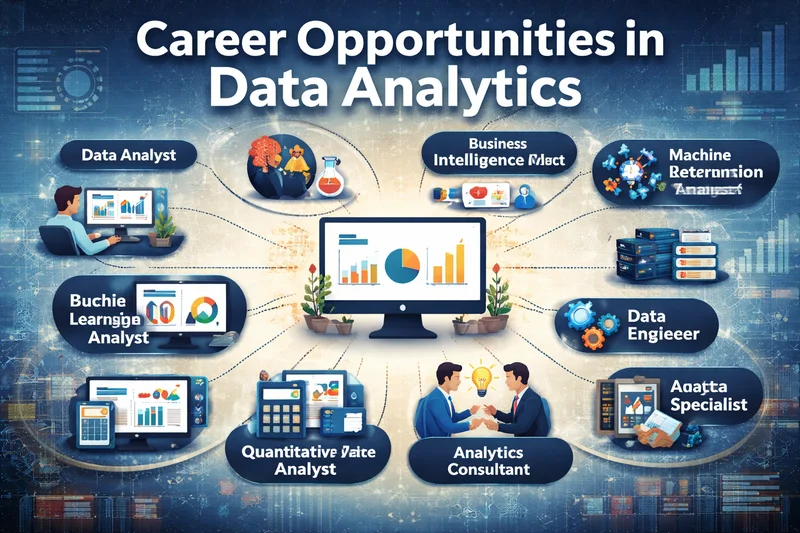
India’s job market in 2026 is a strange beast. If you go by what most AI-generated blogs tell you, we are in a "transformative era of digital synergy." Honestly? That’s just corporate-speak for "we have too much data and no idea what to do with it." The truth is much grittier. Whether it is a massive fintech firm in Mumbai or a fast-commerce startup in a Bengaluru basement, companies are drowning in numbers. They don't need "data janitors" to just clean spreadsheets anymore; they need people who can walk into a boardroom and explain why the company is losing money in Bihar but killing it in Telangana.
If you are looking to break into data analytics this year, you have to realize that the game has changed. A certificate from a random website won’t save you. You need to understand the local pulse of the Indian economy and have the technical "bark" to back it up.
Where the Actual Jobs Are (No Fluff)
Forget the broad titles. In 2026, if you want the high-paying "creamy layer" roles, you have to specialize. The Indian market has matured, and "generalists" are seeing their salaries stagnate.
The "Detective" (Business Intelligence): This isn’t about making pretty PowerPoints. A BI Developer at a company like Zomato or Flipkart is the person who spots that 15% of users are dropping off at the payment screen because the UPI button is too small on older Android phones. It is about the why, not just the what. If you have a knack for visual logic and business strategy, this is a massive opening in cities like Hyderabad and Pune.
The "Logistics Wizard" (Supply Chain & Operations): India is a logistics puzzle—monsoons, festive rushes, and chaotic pin codes. With "10-minute delivery" becoming the national standard, companies are desperate for analysts who can shave 45 seconds off a delivery route. If you like solving real-world puzzles, this is your gold mine.
The "Risk Guard" (FinTech Analytics): With UPI processing billions of transactions, banks are terrified of fraud. They need analysts who can build models to sniff out a suspicious transaction before the money leaves the account. This is high-stakes, but the paychecks in the BFSI sector are some of the highest in the country.
The Skills Reality Check: What Recruiters Quietly Look For
You can have a dozen certificates on your LinkedIn, but if you cannot handle a "Technical Gauntlet"—those live coding rounds where an interviewer watches you write queries in real-time—you are not getting the job. Indian recruiters are now prioritizing "Hands-on Grit" over "Theory."
SQL is your Oxygen: If you cannot write a complex join or a window function on a whiteboard while someone watches, you are done. It is the undisputed language of the industry.
Practical Python: You don’t need to be a software developer. You just need to know enough Pandas and NumPy to clean a "dirty" dataset that would crash Excel in three seconds.
The "Human" Layer: This is where most candidates fail. Can you explain your math to a Marketing Manager who hasn’t touched a calculator since 10th grade? If you can translate a "p-value" into a "profit margin," you are worth your weight in gold.
The "Tutorial Hell" Trap vs. Real Learning
I have seen so many people finish a course and then freeze during a technical interview. Why? Because the data in courses is "clean." In a real Indian office, the data is fragmented, filled with errors, and totally chaotic.
This is where LearnHub Education has found its edge. They don't give you "perfect" data; they give you the broken, chaotic datasets you’d actually find at a company like Reliance or a scaling startup. Their secret weapon? Technical Interview Prep. They don’t just teach the code; they teach you how to explain your logic while the pressure is on. This "Skills Reality Check" is what actually bridges the gap between "I’ve seen a video on this" and "I can do this for a living."
What’s the Paycheck Actually Looking Like?
Let’s be blunt—money matters. In India, the salary range is wider than ever because the demand for skilled talent is through the roof.
Freshers (0-2 Years): With a solid portfolio of real-world projects (not just the basic "Titanic" dataset), starting packages in hubs like Gurgaon or Bengaluru land between ₹6 LPA and ₹10 LPA.
Mid-Senior (3-7 Years): Once you have proven you can handle independent projects, the bracket jumps significantly to ₹15 LPA – ₹25 LPA.
Lead/Architect (8+ Years): In top-tier firms and premium product companies, these roles frequently cross the ₹45 LPA – ₹70 LPA mark.
Pro Tip: To hit the higher end, do not be a "Generalist." Be a "Product Analyst" or a "Marketing Analyst." In India, the more specific the problem you solve, the fatter your paycheck.
Why Now? (And Why Most People Will Fail)
The opportunity is massive because even small local businesses in India are now hiring analysts. It isn't just for the "Big Four" or Google anymore. Your local retail chain needs an analyst just as much as a multinational does.
However, most people will fail because they treat data analytics like a school subject to be memorized. But data is alive. It changes with every festival season, every stock market dip, and every new government policy. To succeed, you have to be curious about the business, not just the tool.
The Bottom Line
You don't need a PhD. You don't need to be a math prodigy. You just need to be curious, master the right tools (SQL and Python), and get some actual, hands-on practice.
If you're tired of the "theory-only" trap, look into platforms like LearnHub Education. They focus on the gritty, technical side of things that actually gets you past the HR screen and through that final, grueling interview round. The data is there. The jobs are there. The only question is: are you ready to stop reading about the "data revolution" and actually start leading it?
Frequently Asked Questions
1. Is the Indian market too saturated for entry-level Data Analysts?
While there are many applicants for junior roles, there is a massive shortage of "job-ready" talent. Most candidates have theoretical knowledge but lack the ability to solve messy, real-world business problems. If you have a solid portfolio, you can still stand out.
2. What is the difference between a Data Analyst and a Data Scientist in India?
In short: Analysts look at the past (what happened and why?), while Data Scientists look at the future (predicting what will happen using Machine Learning).
3. Can I transition into Data Analytics from a non-technical job?
Yes. Many professionals move from Sales, HR, or Operations into "Domain Analytics." For example, an HR professional can become a People Analyst by learning how to use data to improve employee retention.
4. Which tools should I learn first?
Start with Excel (Advanced), then SQL (crucial), and then a visualization tool like Power BI or Tableau. This stack is enough to land 80% of entry-level analytics jobs.
5. Is the salary growth high in this field?
Yes. It is common to see 20–40% hikes during job switches in the first 5 years. Once you reach "Senior Analyst" or "Lead" levels (5+ years), salaries often cross the ₹20 LPA mark.
6. Will AI (like ChatGPT) replace Data Analysts?
AI won't replace analysts, but analysts who use AI will replace those who don't. AI is great at writing code snippets or cleaning data, but it lacks the "business context" that a human provides.
7. What kind of companies hire the most in India?
Service-based: TCS, Accenture, Infosys (High volume hiring).
Product-based: Amazon, Flipkart, Google (Higher pay, tougher interviews).
Captives/GCCs: JP Morgan, Goldman Sachs, Walmart (Great stability and pay).
8. How important are "Communication Skills" in this role?
Extremely. If you find a brilliant insight but cannot explain it to a manager who doesn't know math, your work is useless. You are a storyteller as much as a numbers person.
9. Do I need a Master’s degree (MBA or M.Tech) to grow?
Not necessarily for technical growth. However, if you want to move into senior leadership or "Head of Analytics" roles, an MBA or a specialized Master's can help open doors.
10. Are remote data jobs common in India?
Since the pandemic, many tech firms and startups offer hybrid or fully remote roles. However, most large traditional companies still prefer at least 2–3 days in the office.
11. How do I prepare for a Data Analytics interview?
Focus on three pillars: Technical (SQL queries and Excel formulas), Case Studies (how would you solve a drop in sales?), and Portfolio (explaining the projects you’ve built).