Phone: +91-9310885321
 Email: support@learnhub4u.com

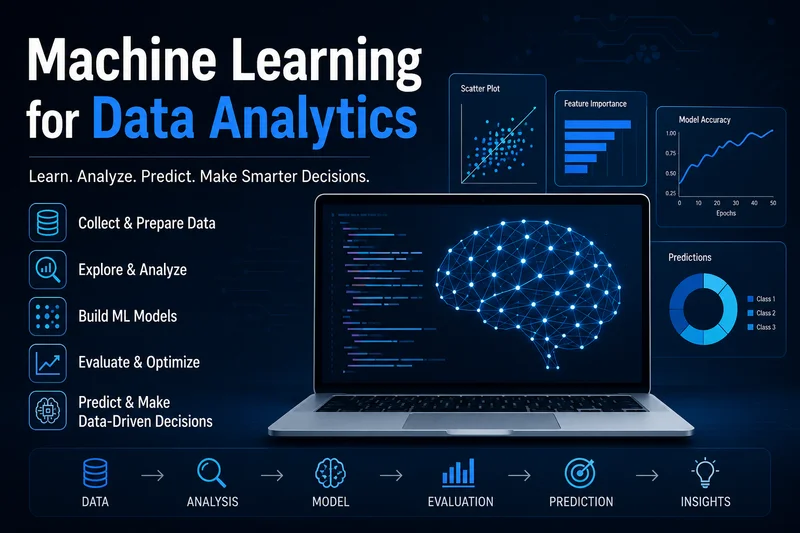
The Truth About Machine Learning in Data Analytics (Without the Hype)
Let’s be honest for a second. If you spend any time on LinkedIn or tech TikTok, you’ve probably heard the term "Machine Learning" about a million times. People talk about it like it’s some kind of sci-fi robot sitting inside your laptop, magically doing your homework and predicting the future.
But if you strip away all the buzzwords, it’s not magic at all. It’s basically just really smart math mixed with computer coding, applied to massive piles of information.
At Learnhub Education, we get that this stuff sounds terrifying when you read it in a textbook. But it doesn't have to be. Whether you’re a college student just trying to pass a stats class, or you're trying to figure out how Spotify always knows exactly what song you want to hear next, let’s break down what’s actually going on under the hood.
Old-School Analytics vs. The New Way
To really get why machine learning is such a big deal, you have to look at how people used to analyze data.
Think of traditional data analytics like looking out the back window of a moving car. You’re only looking at what’s already behind you. You gather up your old data from last month, slap it into an Excel spreadsheet, make a couple of colorful bar graphs, and say, "Cool, we sold more ice cream in July than we did in June." That’s great to know, but it’s completely backward-looking. You’re just reporting the past. If you want to know what's going to happen next month, you basically have to guess.
Machine learning turns that around so you're looking through the front windshield instead. It looks forward.
Instead of a human sitting there staring at a spreadsheet for hours trying to find a pattern, you give that data to a machine learning algorithm. The computer can look at hundreds of different things all at once. It doesn't just look at past sales; it checks the local weather forecasts, beach crowds, school vacation schedules, and even what’s trending on social media.
Then it tells you something useful, like: "Hey, based on these fifty different factors, you’re probably going to sell way more mint chocolate chip next Tuesday. Order extra milk now."
Simply put: old analytics tells you what already happened. Machine learning tries to tell you what’s coming next so you can plan for it.
How Do These Algorithms Actually Learn?
You don’t need a crazy math degree to understand how this works. Honestly, training a machine learning model is exactly like teaching a toddler how to recognize a dog.
You don’t sit a two-year-old down and read them a textbook definition of a canine. You just point at a real dog and say, "Look, a dog!" Then you point at a cat and say, "No, that’s a cat." After the kid sees fifty different dogs—big ones, small ones, fluffy ones—their brain naturally builds a pattern. The next time a strange poodle walks by, the kid instantly knows it’s a dog, even if they’ve never seen that specific type before.
That is exactly what we do with data.
Sometimes we do Supervised Learning, which is just like that classroom style. You give the computer the questions and the answers. For example, you feed it ten thousand emails that are already marked as "Spam" or "Safe." The computer studies them until it learns that words like "free money" usually mean trouble. Then, when a new email shows up, it knows where to put it.
Other times, we use Unsupervised Learning. This is where you give the computer a giant pile of data with zero instructions and say, "Go find a pattern." A store might throw all their customer receipts into the algorithm, and the computer suddenly groups people together based on weird habits—like discovering a whole group of people who only buy snacks at midnight. The store didn't even know that group existed, but now they can target them with ads.
Then there is Reinforcement Learning, which is pure trial and error. It’s how computers learn to play video games or drive self-driving cars. The program tries something, gets a "point" if it does well, and gets a penalty if it crashes. Over millions of quick tries, it figures out the perfect way to win.
Real Life Examples (Stuff You Actually Use)
You probably use machine learning every single day without realizing it.
When you open Netflix or YouTube, those recommendation boxes aren't random. An algorithm is constantly watching what you click on, what you skip, and how many seconds you watch a video. It compares your profile with millions of other people to guess what will keep you glued to the screen.
It’s the same thing with your bank. The second your credit card gets swiped for a weird purchase across the country, an algorithm flags it and freezes your card. It knows your usual spending habits so well that anything out of the ordinary sticks out instantly. Even when you shop online and notice prices changing from hour to hour, that’s just a machine learning program adjusting prices based on supply and demand.
How to Get Into It Without Losing Your Mind
If you’re looking at the job market right now, here is the reality: every single company has too much data and not enough people who know what to do with it. Knowing how to use basic spreadsheets is fine, but knowing how to use machine learning to solve actual problems makes you stand out completely.
You don't need to be a genius coder to start, either. Tools today are way easier to use than they were a few years ago.
If you want a simple game plan, we always tell students at Learnhub Education to start with three steps:
First, learn a little bit of Python coding. It’s the main language for data science, and honestly, it reads a lot like regular English, so it’s not too brutal for beginners.
Second, focus on the "why" instead of just memorizing code. Understand what the data actually means before you start throwing algorithms at it.
Third, pick a project you actually care about. Don't do a boring textbook assignment. If you love basketball, download NBA player stats. If you love gaming, find a dataset of video game sales. Try to predict a trend using data you actually enjoy looking at.
The Big Picture
At the end of the day, machine learning isn't coming to replace human analysts. It’s just a tool to give them superpowers. It takes care of the incredibly boring, repetitive work of crunching numbers, which lets you focus on the fun part: thinking critically and figuring out what the stories behind the numbers actually mean.
The future belongs to the people who can connect raw data with real-world decisions. If you're curious about how to actually do that, check out what we're building at Learnhub Education, and let's start building some real skills.
FAQs:
1. Look, what actually is Machine Learning when you strip away the hype?
It’s basically just teaching a computer by showing it examples instead of giving it a massive list of rules. Think about how you learned to spot a fake friend—nobody gave you a manual, you just noticed the patterns over time. That’s all ML is doing with data.
2. Is it the same thing as Artificial Intelligence or what?
People mix these up all the time, but they aren't the exact same. AI is the big sci-fi dream of making machines smart in general. Machine Learning is just the practical, math-heavy tool we use right now to actually make that happen using raw data.
3. Why does standard data analytics even need ML?
Old-school analytics is basically just looking at a digital receipt. It tells you exactly what you spent last month, which is fine, but it can’t look forward. ML takes that receipt, looks at the patterns, and tries to guess what you’re going to spend next month so you don't go broke.
4. Be honest, do I need to be a math genius for this?
No, seriously, you don't. If you can understand basic logic and aren't terrified of looking at a graph, you’ll be fine. Modern software libraries handle the ugly calculations. You just need to understand why you’re using the tool, not how to calculate the calculus by hand.
5. What’s the deal with supervised vs. unsupervised learning?
Supervised means you're holding the computer's hand. You give it the questions and the answers (like feeding it a bunch of emails already marked as "spam"). Unsupervised means you just dump a pile of messy data on its desk, tell it to figure it out, and it finds weird clusters or groups you didn't even notice.
6. What language should I actually start coding in?
Python, hands down. Don't waste your time looking at anything else right now. The syntax is super clean and it honestly reads a lot like broken English, so you won’t want to pull your hair out while learning it.
7. Can I get into this if I have zero tech background?
Yeah, absolutely. Plenty of people switch into this from regular majors like business, history, or communications. You just have to accept that the first few weeks of learning to code will feel weird, but once it clicks, it clicks. We see people do this all the time at Learnhub Education.
8. How do banks use this stuff to freeze my card?
The algorithm builds a profile of your normal life. It knows you usually buy coffee at 8 AM and spend fifty bucks max. If your card suddenly gets swiped for a thousand-dollar TV halfway across the country, the system screams "weird!" and locks it down instantly.
9. What kind of project looks good on a resume?
Do not build the same boring house-price predictor that everyone copies from YouTube. Pick something you actually talk about with your friends. If you're into gaming, look at historical Steam data. If you love fashion, scrape thrift store trends. Doing something you enjoy makes it way easier to talk about in interviews.
10. What other tools should I know about?
SQL is a big one because you need it to actually grab the data out of company databases. You'll also use Python tools with weird names like Pandas (for sorting stuff) and Scikit-Learn (for building the actual models).
11. How do I actually start without getting overwhelmed?
Don't try to learn everything in a weekend. Start by learning how to clean up a messy spreadsheet using Python. Once you can do that, the machine learning part is just a natural next step. If you want a structured way to do it without the fluff, that's exactly what we focus on at Learnhub Education.