
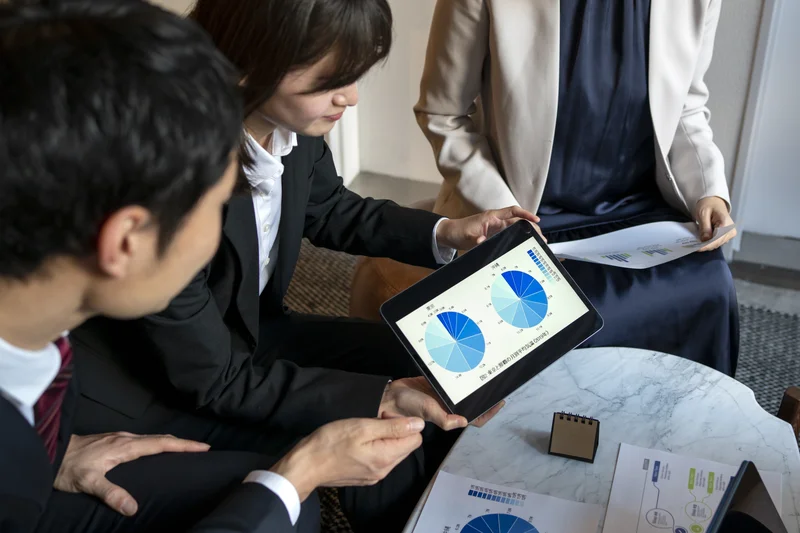
Let’s be honest: for decades, the retail business was a massive guessing game. A store manager would stand in the middle of an aisle, scratch their head, and basically pray they ordered enough milk for the weekend. If they guessed wrong? You either had sour cartons being tossed in the trash or frustrated families staring at empty shelves.
Fast forward to 2026, and that "gut feeling" is officially a relic of the past. At Learnhub Education, we’ve been tracking this shift closely, and it’s honestly fascinating to watch. Retailers aren’t just selling products anymore; they are running live, high-speed data experiments every single hour. Business Analytics has become the invisible hand that stocks the shelves, adjusts the prices, and even decides which specific coupons land in your inbox.
Here’s the real story of how data is flipping the retail world upside down.
The End of "Spammy" Marketing
We’ve all had that annoying moment where we get a promotional email for 50% off baby strollers when we don’t even own a goldfish, let alone a kid. That is "lazy" retail.
Modern stores are using Hyper-Personalization to stop wasting your time. By looking at what you actually clicked on at 11 PM last Tuesday, or how long you spent hovering over a specific pair of hiking boots, they can send you a deal that actually makes sense for your life. It’s moving away from "shouting at the crowd" and toward having a "private conversation" with you. At Learnhub Education, we tell our students: the best data analysts aren't just math nerds; they are digital psychologists.
Solving the "Empty Shelf" Drama
There is nothing that ruins a Saturday faster than driving to the store for one specific ingredient only to find an empty slot on the shelf. On the flip side, retailers absolutely hate "dead stock"—pallets of heavy winter coats sitting in a warehouse in the middle of a July heatwave.
Demand Forecasting is the secret sauce here. Analytics tools are now sophisticated enough to look at:
The "Viral" Factor: If a specific kitchen gadget goes viral on social media on a Monday morning, savvy retailers are already rerouting extra units to those local stores by Tuesday night.
The Weather Man: Data shows that people buy significantly more "comfort food" and batteries about 48 hours before a big storm hits. Analytics lets the store prep before the first raindrop even falls.
The "Moving" Price Tag
Ever notice how a flight to London costs one price on Monday and something totally different by Thursday? That’s Dynamic Pricing, and it’s hitting the retail world hard.
It’s a high-speed game of chess. If a competitor across the street drops their price on flat-screen TVs, an algorithm can match it instantly to stay competitive. Or, if a store has too many boxes of cereal nearing their "best by" date, the price can dip automatically to clear the shelf. It keeps the business profitable and gives the bargain-hunters a genuine reason to keep checking back.
Seeing Through the Walls (Heat Mapping)
You might think data is only for websites, but your local physical grocery store is probably "reading" your footsteps. No, it’s not creepy surveillance—it’s Heat Mapping.
Retailers use basic sensors or Wi-Fi pings to see where people actually walk and where they get stuck.
The "Bermuda Triangle": If a certain corner of the store is always empty, they might move the bread or the eggs there to naturally pull people through the whole shop.
The Checkout Struggle: If data shows that the line gets five people deep every Friday at 5 PM, the manager knows exactly when to pull a staff member from the back to open a new register. It’s all about making sure you don't leave the store feeling frustrated.
Listening to the "Vibe" (Sentiment Analysis)
What happens when a big brand launches a new sneaker and everyone on Reddit and Twitter absolutely hates the color? In the old days, the company wouldn't know until sales tanked months later.
Now, they use Sentiment Analysis. They "listen" to the internet in real-time. If the public vibe is negative, they can pull the expensive ads or change the marketing strategy on Day 2. It’s about being humble enough to listen to what the customers are actually saying behind your back.
Why This Matters (The Learnhub4u Take)
If you’re looking for a career path right now, "Retail Analytics" is basically a golden ticket. Why? Because even the "mom and pop" shops are being forced to compete with giants like Amazon, and they desperately need people who can make sense of the numbers.
At Learnhub Education, we always say: "The code is the easy part, but the context is what matters." A company doesn't just want someone who knows Python; they want a person who can say, "Hey, our Saturday morning crowd loves organic coffee—let's put the high-end grinders right at the end of Aisle 3."
The Final Word
Business Analytics is the "Superpower" of 2026. It makes shopping faster, keeps prices fair, and—most importantly—stops stores from wasting mountains of unsold products.
The retail world isn't about who has the biggest billboard anymore. It’s about who has the clearest view of their own data. If you’ve got a "detective" mindset and you love figuring out why people do what they do, this is exactly where you want to be. The days of guessing are over. The era of knowing has just begun.
FAQs
1. What is the difference between descriptive and predictive retail analytics?
Descriptive analytics tells you what happened (e.g., "We sold 500 units last week"). Predictive analytics tells you what might happen (e.g., "Based on current trends, we will likely sell 750 units next week, so order more stock now").
2. How does analytics help reduce "out-of-stock" issues?
It uses historical sales data combined with external factors like weather or holidays to create demand forecasts. This ensures retailers have the right amount of product at the right location without overstocking.
3. Can analytics really improve the in-store customer experience?
Yes. By analyzing heat maps (where people walk in a store), retailers can optimize store layouts, ensuring popular items are easy to find and staffing levels are higher during peak "rush hours" identified by data.
4. What is "Dynamic Pricing" and is it fair to customers?
Dynamic pricing is the practice of adjusting prices based on market demand and supply. While it can lead to higher prices during peaks, it often results in deeper discounts for consumers when inventory is high or demand is low.
5. How do retailers use my purchase history?
They use it for Market Basket Analysis. If data shows people who buy organic flour also tend to buy almond milk, the retailer will place those items near each other or send you a bundle offer for both.
6. What role does "Real-Time Analytics" play? It allows for "in-the-moment" marketing. For example, if you walk past a store and have their app, the store can send a push notification with a discount for an item you recently looked at online.
7. How does analytics help with labor management? It predicts foot traffic patterns down to the hour. This allows managers to schedule the exact number of employees needed, preventing "bored" staff during slow times and "overwhelmed" staff during rushes.
8. Is my data safe with all this retail tracking? Modern retail analytics prioritizes "First-Party Data" and encryption. While tracking is high, global regulations (like GDPR) require retailers to be transparent and give you the right to "opt-out" of certain data collection
Topics