Phone: +91-9310885321
 Email: support@learnhub4u.com

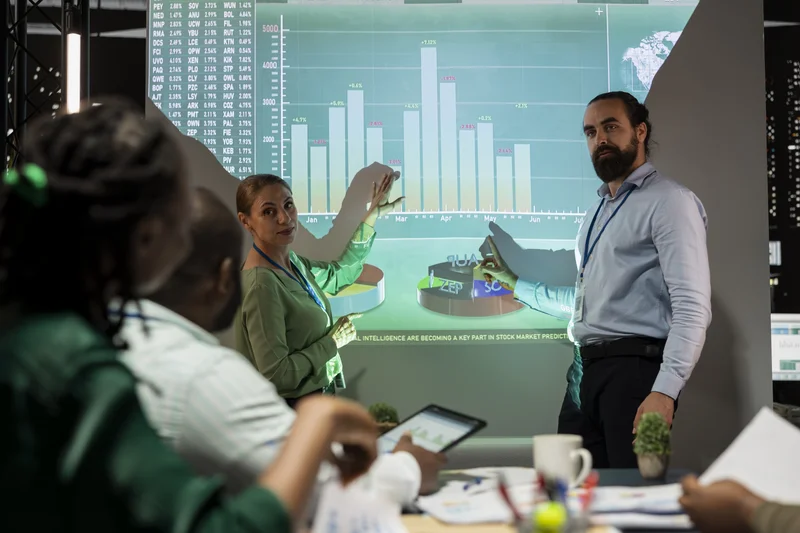
The "Paper Scientist" Problem in 2026
If you walk into a tech hub like Bengaluru or Gurgaon today, you’ll see a massive surplus of people who have "Data Scientist" on their LinkedIn but zero ability to fix a broken data pipeline. They’ve spent months clicking through colorful slides and running pre-cleaned datasets. At LearnHub Education, we call these "paper scientists." They have the certificate, but they lack the grit. When they hit a real-world interview—the "Technical Gauntlet"—they fall apart because they can’t explain why a model failed or how to talk to a stakeholder who only cares about the bottom line. We decided to stop playing school and start acting like a high-pressure workplace.
Getting Your Hands Dirty with "Ugly" Data
The first thing we teach is that we hate "clean" data. Standard bootcamps give you a tidy CSV file where everything is labeled. That is a total fantasy. In a real job at an investment bank or a logistics firm, data is a catastrophe. It’s buried in aging legacy systems, full of typos, and the timestamps are a mess of different time zones. We make our students do the "dirty work" from week one. We don't give you a polished file; we give you raw, unformatted streams and buggy APIs. You’ll spend weeks just learning how to "plumb" the system—scrubbing noise and merging conflicting records. Why? Because 80% of your value is earned in this preparation stage. If you can’t fix a broken pipe, you’re just a passenger on the team.
Gen AI: The Assistant, Not the Boss
We have to talk about Gen AI. By 2026, if you aren’t using Large Language Models to speed up your coding, you’re working with one hand tied behind your back. But there is a trap: too many people let the AI do the thinking. They "prompt" their way through projects without understanding the logic. At LearnHub Education, we treat Gen AI as a senior assistant. We show you how to leverage it for the "heavy lifting"—refactoring clunky scripts or generating synthetic data. But we also have "blackout" days where the AI is gone. You have to understand the math so deeply that you can spot when an AI is "hallucinating" a wrong answer. If you can’t debug without a chatbot, you won’t survive a live coding round in a top-tier firm. You learn to audit the machine, not just trust it blindly.
Surviving the "Technical Gauntlet"
The hiring process has become a marathon of endurance. It’s no longer just a chat with HR. It’s live coding on a shared screen while two senior devs watch every move you make. It’s whiteboarding complex architectures for a room full of skeptics. We prepare you for this with "Boardroom Defenses." You don't just 'submit' a project; you stand up and defend your choices to mentors acting as cynical stakeholders. We push you to explain your work in plain English. If you can’t tell a CFO how your model saves ten million rupees, your technical skills are useless. We bridge the gap between "math enthusiast" and "business strategist" who understands ROI.
MLOps: Moving Beyond the Notebook
Most students live inside a Jupyter Notebook. It’s a safe, quiet bubble. But serious companies don't run their businesses on notebooks; they run on production-grade, scalable systems. This is where MLOps (Machine Learning Operations) comes in, and it’s a pillar of LearnHub Education. We teach you the engineering side—containerizing models with Docker, managing them with Kubernetes, and pushing them to the cloud. You’ll also learn to monitor "Model Decay," knowing exactly what to do when your model starts losing its edge six months after deployment. This level of technical maturity is what sets our graduates apart. Employers are starving for people who know how to actually ship code, not just write it.
The Power of Domain Specialization
The world is tired of "generalists." Companies don't want someone who just knows how to run a regression; they want someone who understands their specific industry. A fraud model in banking is a different beast than a supply chain model in a rural Indian market. At LearnHub Education, we don't let you stay a generalist. We offer tracks in Finance, Healthcare, and E-commerce. You’ll work on capstone projects using real scenarios—like predicting market volatility or optimizing last-mile delivery in a city as chaotic as Mumbai. When you walk into an interview, you aren’t just talking about "algorithms." You’re talking about the specific pain points of that company’s business. That is how you get the offer letter.
Why We Do This
I’m being this direct because I’ve seen too many brilliant people fail because they were taught the "what" but never the "how." The world doesn't need more people who can follow a tutorial. It needs problem-solvers who can look at a pile of messy data, a falling business metric, and a tight deadline and say, "I’ve got this." Our goal at LearnHub Education isn't just to help you pass a test. It’s to fundamentally change the way you solve problems. We want to turn you into a professional who is resilient, skeptical, and incredibly sharp. We want you to be the person who doesn't just ask for a seat at the table but eventually leads the whole conversation.
The data revolution is moving faster than most people can keep up with. Don’t get left behind in a theoretical bubble. Join us, and let’s get to work on the things that actually move the needle in the real world.
FAQs
Do I actually need a math degree to survive this?
Not a degree, no. But you can't be allergic to math. If you're comfortable with high-school-level algebra and don't mind learning how probability works, you’ll be fine. We teach you the logic behind the numbers, not how to solve 5-page proofs by hand.
I’ve never written a line of code. Am I going to drown?
The first week feels like learning a foreign language while underwater, honestly. But we start with Python from scratch. If you can follow a recipe to bake a cake, you can learn to write a script. It just takes a lot of "copy-pasting until it clicks."
What does "Hands-On Industry Experience" actually mean here?
It means you aren't just doing "Titanic" dataset tutorials from 2014. You’ll be working on messy, "dirty" data provided by our partner companies. You’ll have to clean up typos, handle missing info, and present your findings to actual humans, not just an automated grader.
The Career Pivot
Is the job market for Data Science actually dead?
It’s not dead, but the "entry-level" bar is higher than it used to be. Companies aren't hiring people who just watched a few videos anymore. They want people who can prove they’ve solved a business problem. That’s why we focus so heavily on your portfolio.
Will you actually help me get a job, or just give me a PDF certificate?
A certificate won't get you hired; your GitHub and your interview prep will. We do resume deep-dives and mock interviews that are actually tough. We don’t "give" you a job, but we make sure you don't look like a total amateur when you walk into the room.
I'm 40+. Is it too late to switch into this field?
Actually, your "old" experience is a superpower. A 40-year-old with 15 years of experience in retail or finance who also knows Data Science is way more valuable to a company than a 22-year-old who only knows code but doesn't understand how a business works.
The Course Experience
How many hours a week do I really need to put in?
Don't believe the "5 hours a week" lies. If you want to actually get good, plan for 15–20 hours. Between the lectures, the coding labs, and the moments where you're staring at a syntax error for an hour, it adds up.
What happens if I get stuck on a project at 11 PM?
We have a dedicated Discord/Slack community. Usually, a fellow student or a TA is lurking around to help. If not, part of the "industry experience" is learning how to use Stack Overflow and AI tools to debug your own problems.
Do I need a super-expensive "gaming" laptop for this?
Nope. As long as your laptop has 8GB of RAM (16GB is better) and a decent processor, you're good. Most of the heavy lifting is done in the cloud using tools like Google Colab or AWS anyway